TL;DR — AI Affiliate Traffic Optimization in iGaming
→ AI-driven affiliate optimization delivers real commercial outcomes—faster fraud detection, traffic quality scoring at the sub-source level, and commission decisions grounded in player lifetime value rather than deposit events. The operators who tell us it didn’t work aren’t wrong that it didn’t work. They’re wrong about why.
→ Almost every failed AI affiliate optimization initiative we’ve examined shares the same root cause: the platform underneath the affiliate program wasn’t built to support real-time decision-making. AI models are being layered on top of batch-architecture data pipelines, commission logic that lives in spreadsheets, and event streams where the sub-source mapping breaks before the player reaches their second deposit.
→ AI doesn’t fix data architecture problems. It amplifies whatever the underlying data model produces. Run AI on stale, aggregated, poorly mapped data, and you get better-looking dashboards reporting the same expensive outcomes.
→ This post covers the infrastructure an affiliate platform has to deliver before AI optimization becomes operationally real—and what the specific failure modes look like when that infrastructure is missing.
The Part of AI Affiliate Optimization Every Vendor Glosses Over
Every affiliate management platform marketed in iGaming today claims AI capabilities. Real-time traffic scoring, predictive LTV models, automated fraud detection, intelligent commission optimization — these phrases appear in almost every vendor pitch deck we’ve reviewed.
The gap between the claim and the engineering is significant. And expensive.
We see this directly when operators migrate to Scaleo from other platforms. One of the first things we audit during onboarding is how the previous platform was handling event data—what it was capturing, at what granularity, with what latency between event occurrence and commission engine awareness, and whether the commission accrual logic was tied to clean event chains or running on aggregated daily summaries. What we find, consistently, is platforms that have added AI reporting features on top of data pipelines designed a decade ago. The AI layer is real. The data underneath it is not.
That gap matters because AI optimization for affiliate traffic is only as good as the data it ingests. A model scoring traffic quality cannot correct for missing sub-IDs. A fraud detection system cannot catch patterns in data it doesn’t have access to in real time. A commission intelligence engine cannot suggest moving a partner from CPA to hybrid when it can’t see downstream revenue data on the same event timeline as the acquisition data.
This is the infrastructure problem that most discussions of AI affiliate marketing don’t address. We’re going to address it directly.
What AI Actually Changes When the Platform Supports It
In iGaming affiliate operations, AI changes four things that matter commercially. Not in theory. In the margin line.
Traffic quality moves from a retrospective judgment to a predictive one. Manual review catches quality deterioration in the cohort report — usually after the payment cycle has closed and the commission has been paid. An AI-supported platform scores incoming traffic against historical quality patterns and surfaces anomalies while the campaign is still live. A source that starts producing abnormal device clustering, unusual session depth uniformity, or off-baseline conversion timing gets flagged in hours. Not weeks.
Commission decisions get grounded in player value, not deposit events. A first-time depositor tells you that an acquisition occurred. It tells you almost nothing about whether that player will produce net gaming revenue, survive KYC review, generate a chargeback, or remain active past day seven. AI models trained on historical cohort behavior can score incoming FTDs against value probability early enough to influence whether commission should accrue or whether that conversion should enter a hold queue pending quality confirmation.
Fraud detection runs synchronously rather than retrospectively. A batch fraud detection job that runs every six hours will catch fraud patterns. It catches them after the commission has been earned. In many cases, after the partner has been paid. Real-time fraud detection — detection that runs synchronously with click attribution and conversion events — gives the platform the ability to flag a pattern before it becomes a booked liability. For AI specifically, the relevant point is that a model can’t update its understanding of what normal traffic looks like if the data it’s learning from is hours stale.
Budget and deal allocation become data decisions rather than relationship decisions. Experienced affiliate managers develop strong intuitions about which partners deserve more budget. Those intuitions are valuable. They also carry blind spots, gradual performance drift, sub-ID variation that doesn’t surface in top-line partner reports, or GEO-level quality shifts that a manager running thirty active relationships won’t notice until the month-end reconciliation. AI surfaces what the human attention layer misses. Not instead of that attention layer. Alongside it.
None of these outcomes are achievable on a platform that can’t expose event-level data with sub-second latency, support commission rule modifications that take effect within the same processing cycle, and maintain a clean source-to-player mapping through the full lifetime of the player relationship.
Commission Intelligence: What AI Finds That Manual Review Misses
The commercial model an operator runs with each partner shapes the quality of traffic that partner is incentivized to send. That’s not a new observation. What changes with AI is the speed and specificity at which misalignment between deal structure and actual traffic quality becomes visible.
A CPA deal with a media buyer sending multi-GEO casino traffic is a standard program component. Manual review of that deal might surface—eventually—that one acquisition source within that partner’s traffic is producing elevated chargeback rates, or that mobile cohorts are retaining at half the rate of desktop cohorts from the same partner. AI surfaces that disparity at the sub-source level, within the same conversion cycle, with enough lead time to influence the deal before another payout closes.
The question that determines which AI insight is actionable isn’t the quality of the model. It’s whether the platform can Start a deal modification based on the model’s output without a week of back-and-forth between the affiliate team, finance, and platform support.
| Commission Model | Event Data the AI Needs | Where AI Adds Decision Speed | Where Platforms Fail It |
|---|---|---|---|
| CPA | FTD event, fraud score, qualification outcome, 7-day retention signal | Score FTD quality before commission approval; flag sub-sources diverging from partner baseline | Commission accrual triggers before fraud or KYC outcomes are available in the same data layer |
| RevShare | Player-level net gaming revenue timeline connected to acquisition source | Model revenue trajectory from early cohort signals; flag partners whose LTV tracks below program average | Revenue data lives in a separate system and can’t be joined to acquisition source on the same event timeline |
| Hybrid | Acquisition events, downstream revenue, and deal tier logic — all on the same timeline | Improve the fixed vs. revenue split by cohort behavior; identify when the fixed component overpays relative to realized value | The hybrid deal structure exists in a configuration spreadsheet, not in the commission engine |
| CPL | Lead qualification events, downstream FTD conversion rate by source, KYC outcome | Score lead quality against historical FTD conversion probability before approving the lead | Loose lead definitions and a broken mapping from lead to eventual FTD prevent AI scoring the relationship |
The table above describes an AI capability problem only in the third column. The fourth column is the actual problem. It’s always a data architecture problem wearing the costume of an AI optimization problem.
We’ve watched affiliate managers receive an AI insight—this sub-source is producing 40% lower LTV than the account average—and have no way to act on it without a week-long back-and-forth between the affiliate team, finance, and whoever manages the platform’s deal configuration. The insight was correct. The platform made it commercially useless.
Traffic Qualification After the First Deposit: The Events That Actually Predict Value
Optimizing affiliate acquisition against the first-deposit event is, in 2026, an operationally defensible position only if the operator genuinely has no downstream data to work with. Everyone has downstream data. The question is whether it’s connected to the acquisition source.
A first deposit is a conversion event. Not a value event. The commercial judgment that matters—was this acquisition worth the commission we paid or are about to pay—can’t be answered from the deposit event alone. The answer is in what the player does afterward.
The post-acquisition signals that AI can act on when the platform maintains source-to-player mapping through the full player lifecycle:
- Second-deposit rate within 72 hours. Players who return and deposit again in the short window after first deposit are behaviorally distinct from one-and-done cohorts. That distinction is visible fast enough to influence source scoring within the same campaign window.
- KYC completion and pass rate by acquisition source. When a specific partner or sub-source produces elevated KYC failure rates, that’s a compliance exposure and a margin exposure simultaneously. The AI doesn’t need a full cohort to mature to surface this. It needs KYC outcomes mapped back to the acquisition source in the same event stream.
- Net gaming revenue at 7, 14, and 30 days by source. Not gross wagering volume. Net revenue after bonuses, reversals, payment processing costs, and applicable tax treatment. This is the number that determines whether the CPA was worth paying—and it’s available in fragmentary but directionally useful form much earlier than most operators wait to look at it.
- Promo concentration and bonus utilization patterns. Bonus hunters are identifiable from behavioral patterns that appear in the registration flow and the session structure around the first deposit. The profile isn’t perfect, but it’s consistent enough that AI can score promo abuse probability as part of conversion qualification rather than discovering it after the bonus has been credited.
- Chargeback rate by acquisition source, tracked at the sub-ID level. Chargebacks cluster. A specific sub-source, or a specific time window within a partner’s traffic, often accounts for a disproportionate share of chargeback exposure. AI can detect that clustering greatly faster than monthly reconciliation reports.
Connecting these events to acquisition sources requires a platform architecture that maintains a clean player-to-source mapping through the full relationship. Many platforms maintain this mapping through the conversion event and lose it somewhere in the transition to the player management layer. When the mapping breaks, AI optimization for downstream value is impossible. The model has no data to learn from.
The KPI Model That Has to Be Right Before Automation Can Help
We’ve had this conversation with enough operators that we can script the setup. An operator has invested in an AI optimization layer for their affiliate program. Initial results look strong—FTD volume is up, and the dashboard shows green across efficiency metrics. Three months in, margin hasn’t moved. In some cases it’s worse.
The post-mortem is almost always the same. The AI was optimizing toward the wrong thing.
AI doesn’t choose what to tweak toward. The operator does, via the KPI model the platform is configured to pursue. Configure the system to maximize FTD volume, and AI will maximize FTD volume. Efficiently. Including the bonus-hunting, high-chargeback, low-retention FTDs that look identical to genuine high-value acquisitions at the deposit event.
The KPI hierarchy that supports genuine AI optimization in iGaming:
North Star: LTV:CPA ratio, computed at the cohort level. Not as a program aggregate. By partner, by sub-source, by GEO, by device class. The ratio has to be computable at the granularity where sourcing decisions are actually made. A program-average LTV:CPA that looks healthy can hide two or three partners who are systematically unprofitable at a deal structure that hasn’t been revisited because the aggregate number doesn’t reveal the problem.
Operational layer — the metrics that trigger decisions within the campaign cycle:
- Approved FTD rate (conversions that survive qualification, separated from raw deposit events)
- CPA recovery window (how many days until net player revenue covers acquisition cost — this number varies significantly by GEO, product, and partner type)
- Source-level retention at 7, 30, and 90 days
- Fraud and compliance exception rate by acquisition source, not aggregated at program level
- Net revenue contribution by partner after deductions, not gross wagering contribution
Early-warning signals that require same-day action, not monthly reporting:
- Sudden improvement in click-to-FTD rate from a source without a corresponding improvement in downstream quality metrics—this pattern is almost always either a fraud cluster or promo abuse
- Device fingerprint clustering within a short conversion window
- Conversion timing that deviates from a source’s established distribution pattern
- Second-deposit rate decline in a cohort that looked strong at the FTD level
Operators who tell us AI didn’t work for their affiliate program are almost uniformly describing a program where the KPI model stopped at the deposit event. The AI was working correctly. The definition of success was commercially wrong.
Four Deployment Scenarios Where Platform Infrastructure Decides the Outcome
Scenario One: A Partner’s Conversion Metrics Improve Suddenly
Volume up, FTDs up, account manager satisfied. Simultaneously, the platform’s AI layer flags that the second-deposit rate on this partner’s traffic is tracking 24% below the account’s historical baseline and that session-depth distribution in the new traffic looks statistically different from the same partner’s established profile. The platform has a commission hold mechanism. Commission accrual on flagged conversions is paused pending manual review. Review confirms a click injection pattern operating through a specific sub-ID. The hold catches it before commission is booked.
Without the hold mechanism—without synchronous fraud validation and a commission engine that can act on the output—that fraud pattern would have surfaced in the monthly fraud report, after payment.
Scenario Two: A Mobile Campaign Enters a Newly-Licensed GEO
FTD metrics look strong in the first two weeks. The AI model compares this cohort against historical first-entry cohorts for similar GEOs and estimates LTV tracking at 58% of program average, with the gap concentrated in mobile payment completion rates and first-week churn. The platform’s deal configuration supports dynamic CPA adjustments at the GEO and device level within the existing partner agreement. The operator reduces CPA for this source by 18% while maintaining campaign exposure. The source continues at a deal structure that reflects the cohort’s actual projected value rather than the program’s standard rate.
On a platform where CPA adjustment requires a configuration ticket, this window closes before the action can be taken.
Scenario Three: A RevShare Partner’s Cohort Underperforms for a Sustained Period
The relationship is commercially important. Manual review has been ongoing for four months without resolution. AI-level cohort analysis segments the underperformance by device class, GEO, and registration window and identifies that the problem is concentrated in one device segment entering through one specific landing path. The rest of the partner’s traffic is at or above program average. The platform supports partial deal renegotiation—revised RevShare terms for the underperforming segment and unchanged terms for the rest. The partner relationship is preserved. The margin position on the underperforming segment improves.
Without the analytical granularity to segment the problem, the operator faces a choice between cutting a commercially valuable partner entirely or accepting the underperformance indefinitely. Neither option is correct.
Scenario Four: A High-Volume Partner Pushes Traffic During a Major Sports Event Window
Volume exceeds what manual review can process in time. The platform’s fraud detection runs synchronously with conversion events — not on a scheduled batch cycle. Within the event window, the system flags three patterns across a subset of conversions: device fingerprint clustering across IP ranges that don’t match the declared GEO, session depth uniformity inconsistent with genuine browsing behavior, and payment method concentration in a single instrument type across geographically disparate registrations. Those conversions enter a fraud review queue. Commission does not accrue. Manual review confirms the pattern. The commission liability on those conversions is zero.
Batch detection would have found the same pattern in the next scheduled job—after the payout cycle closed.
In all four scenarios, the AI model performed a detection or scoring function that would have been operationally impossible to replicate manually at the required speed. In all four scenarios, the outcome depended entirely on whether the platform could act on the model’s output in time—with commission hold mechanisms, dynamic deal configuration, and synchronous event processing. The model was necessary. It wasn’t sufficient. The platform infrastructure was what converted the insight into a commercial outcome.
What the Affiliate Platform Has to Do for AI to Function
The requirements aren’t exotic. They’re the operational fundamentals that newer platform architectures provide and that legacy platforms have added workarounds for.
Event-level data with sub-second latency, end-to-end. Every click, impression, conversion, qualification event, revenue event, and compliance outcome has to flow through the same event stream with complete source mapping and accurate timestamps. Aggregated daily summaries are not a substitute. A fraud model can’t detect an intra-day pattern in a data layer that doesn’t have intra-day resolution.
Commission logic that the AI output can modify without breaking the cycle. When a model scores a sub-source as high-risk, the platform has to be able to act on that score—reducing commission rates, holding accrual, or routing conversions to a review queue—without a configuration process that outlasts the next payment cycle. We’ve seen platforms where changing a CPA rate for a single partner required a support ticket and a five-business-day turnaround. AI insights become worthless at that response latency.
Clean sub-ID tracking through the complete player lifecycle. The mapping from acquisition source to player has to remain intact through KYC, through the first deposit, and through the revenue events that determine whether the acquisition was profitable. When that mapping breaks — and in many legacy platforms it breaks at the player management handoff — downstream cohort analysis is structurally impossible. There’s no data to connect to the source.
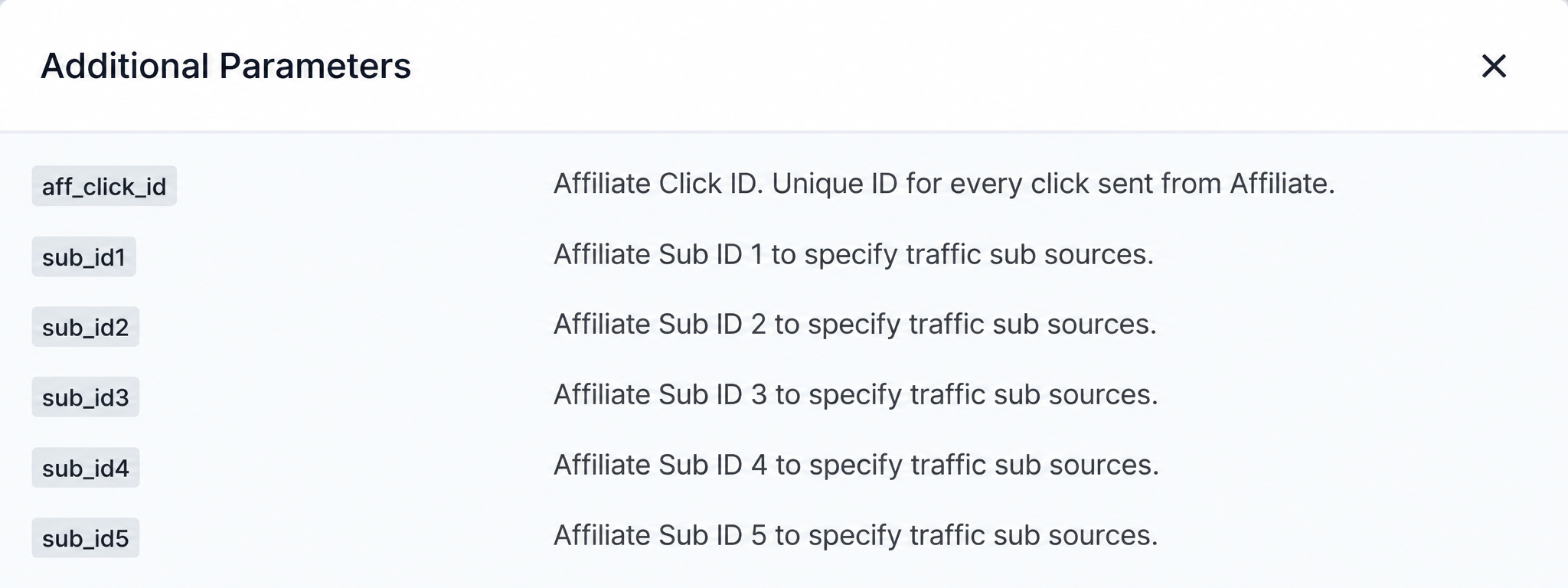
Fraud, compliance, and attribution logic on a shared event timeline. These three functions are often implemented as separate systems that reconcile at month-end. That’s too late for AI to act on. The fraud signal, the compliance outcome, and the attribution record have to be available on the same event stream for the model to produce same-day actionable output.
Commission hold mechanisms that don’t require manual escalation. AI-flagged conversions need a path to a hold queue that pauses commission accrual without stopping the campaign. This is different from a fraud ban. It’s a conditional hold—the conversion is provisionally accepted, commission doesn’t accrue, and human review determines whether to approve or reject. Many platforms don’t support this state. They force a binary choice between approving commission and blocking the traffic entirely.
We, the team behind Scaleo, built the platform’s architecture around these requirements because we’ve seen what happens on the platforms that treated them as optional. The conversations during migration onboarding are consistent: operators discover their previous platform was running fraud review on a 24-hour batch cycle, that sub-IDs were mapped to conversion events but not to the downstream player record, and that commission modifications required a support ticket with a five-day turnaround.
AI optimization doesn’t create these problems. It exposes them faster.
The operators getting genuine commercial value from AI affiliate optimization aren’t doing anything more sophisticated than the others. They’re running programs on platforms that can expose clean event data, support real-time decision logic, and translate AI output into operational actions without a week-long workflow in between.
Frequently Asked Questions: AI Affiliate Optimization in iGaming
What does AI affiliate optimization actually do in an iGaming affiliate program?
At an operational level, AI handles pattern recognition and event monitoring at a scale and speed that manual review can’t match. It scores traffic quality against historical cohort baselines, flags fraud anomalies before commission accrues, estimates player lifetime value from early behavioral signals, and surfaces commission model misalignment at the sub-source level. The strategic decisions—partner selection, GEO strategy, and deal structure—remain with the affiliate management team. AI handles the monitoring and scoring load that executing those decisions correctly requires. The most important thing to understand is that AI amplifies the accuracy of the data model underneath it. If that model is clean, AI is genuinely useful. If it’s not, AI makes the wrong conclusions faster.
Why do AI affiliate optimization projects fail in iGaming?
The most consistent failure mode is platform infrastructure — specifically, affiliate platforms that can’t expose real-time event-level data, can’t modify commission logic dynamically, or can’t maintain clean source-to-player mapping through the full player lifecycle. The second most common failure mode is a KPI model that stops measuring at the deposit event and doesn’t connect acquisition data to downstream player value, compliance outcomes, or fraud signals. When these problems exist, AI optimization produces sophisticated reporting on the wrong inputs. The insights look credible. The commercial outcomes don’t improve because the model is optimizing toward metrics that don’t reflect actual program profitability.
How should iGaming operators choose between CPA, RevShare, and hybrid commission models?
The right model depends on partner type, source characteristics, GEO maturity, and how quickly the platform can verify quality. CPA structures work when the source has a documented history of qualified acquisitions and the platform can hold commission approval pending quality review. RevShare makes more sense when the partner influences longer player research journeys and the GEO has enough product maturity to support delayed return realization. Hybrid structures — a fixed acquisition component combined with revenue share — are most commercially useful when the operator wants to reduce pure CPA exposure without losing partners who need upfront economics. The model itself matters less than whether the platform can measure actual player value at the cohort level and Start deal modifications based on that measurement without a week-long configuration process.
What KPIs matter most for AI-driven affiliate traffic optimization in iGaming?
The North Star metric is the LTV:CPA ratio, computed at the sub-source level rather than the partner or program level. Supporting metrics that Let live decision-making within the campaign window include the approved FTD rate separated from raw conversion events, CPA recovery window by source, retention at 7 and 30 days by cohort, fraud and compliance exception rate at the sub-source level, and net revenue contribution per partner after deductions. KPI models that measure at the deposit event and don’t connect to downstream revenue or compliance outcomes will produce AI optimization outputs that look efficient in dashboards and underperform in margin. The definition of success has to be set correctly before automation can pursue it.
How does real-time fraud detection in affiliate programs differ from batch fraud detection?
Batch fraud detection identifies fraud patterns in aggregated data reviewed on a scheduled cycle—often every few hours, sometimes once daily—and commission accrues during that window. Real-time fraud detection runs synchronously with click attribution and conversion events, scoring each event against the platform’s fraud model before commission accrual is triggered. The practical difference: real-time detection can hold commission on a flagged conversion before it becomes a liability. Batch detection reports a fraud event the platform has already paid for. For operators evaluating affiliate platforms, the diagnostic question is what the latency is between a fraudulent conversion event and the platform flagging it. Answers above 30 minutes describe batch detection regardless of how the feature is marketed.
Running AI on infrastructure that wasn’t built for it?
We’ve audited the same failure pattern across enough operator programs to know exactly where the data architecture breaks—where the sub-ID mapping stops following the player, where commission logic can’t respond to AI output fast enough to matter, and where batch detection is dressed up in real-time marketing copy. If you’re questioning whether your current platform can support genuine real-time scoring and dynamic commission logic, that conversation starts with the event layer.