Quick Answer
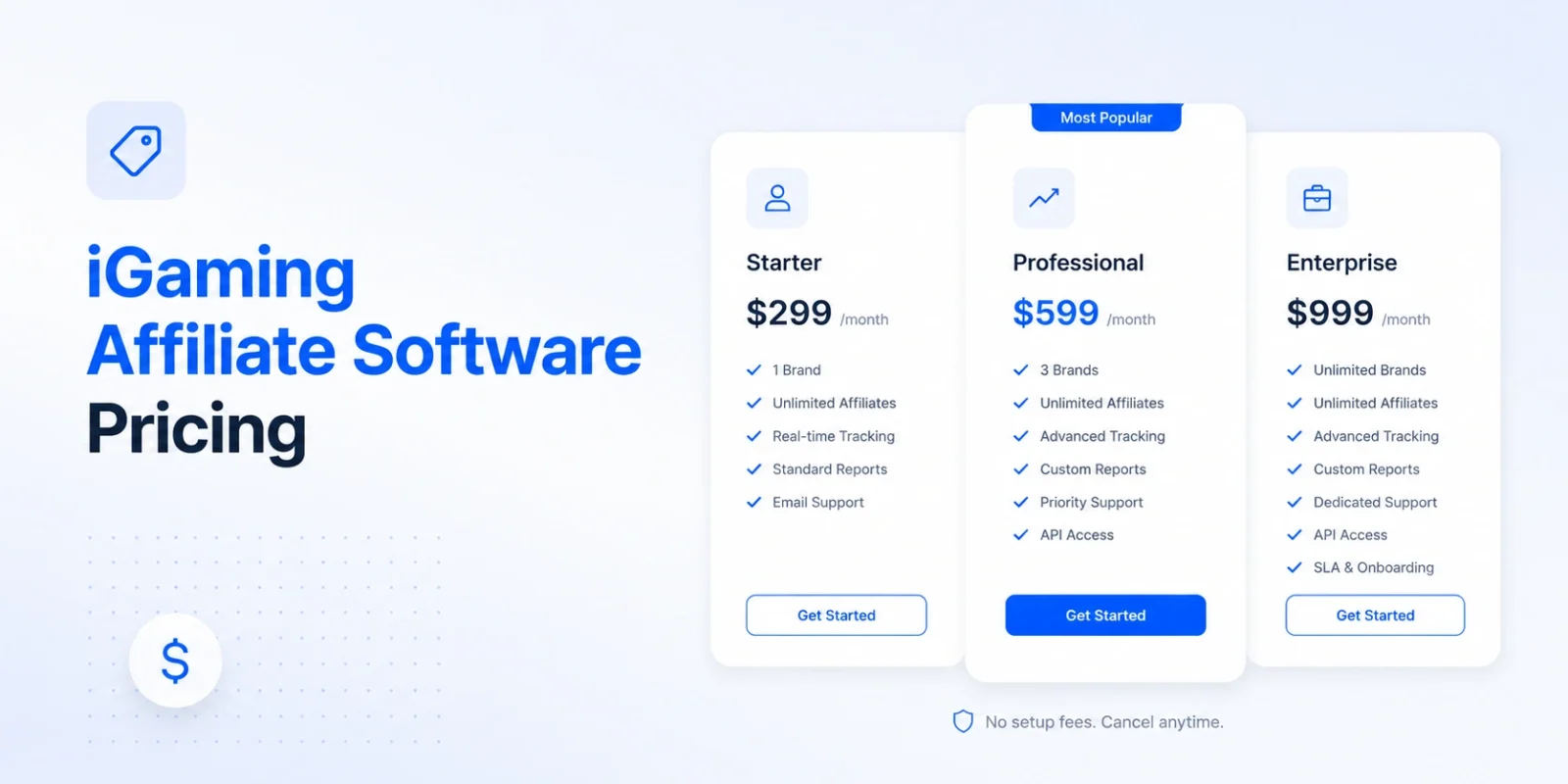
iGaming affiliate software pricing splits into two structures: SaaS subscriptions billed against tracked click and conversion volume, and legacy enterprise contracts with separate setup fees that are often disclosed only after the first demo call. Setup fees typically fund postback configuration, commission-logic builds, and data migration — not the software license itself. Monthly costs range from $500-$1,500 for new single-brand launches to $5,000-$15,000+ for enterprise operators, with setup fees between $1,000-$15,000 depending on complexity.
TL;DR
- Price scales with tracked click volume and brand count — not seat count or a feature-tier menu.
- SaaS subscriptions and legacy enterprise contracts price very differently. Know which one you’re being quoted before you compare numbers.
- Setup fees fund real implementation work: postback configuration, commission-logic builds, data migration. A “zero setup fee” vendor has usually priced that work into the subscription instead.
- The costs that actually blow budgets aren’t the headline price — they’re volume-tier overages, API caps, and multi-brand licensing add-ons that activate after you sign.
- Ask for the full fee schedule, not just the monthly rate, before you shortlist a vendor.
Every operator evaluating iGaming affiliate software eventually asks the question a demo call won’t answer directly: what does this actually cost, all in? Price isn’t set by feature count. It’s set by tracked click volume, the number of brands running on one instance, how complex your postback and API setup is, and which support tier you need. This breaks down the real cost drivers, the two dominant pricing models, and the fees that tend to surface only after a contract is signed.
What Actually Drives iGaming Affiliate Software Pricing
iGaming affiliate software pricing is driven primarily by four factors: tracked click and event volume, the number of brands or properties on one instance, postback and API integration complexity, and support or SLA tier — not by a fixed feature-tier menu the way most horizontal SaaS pricing works.
- Tracked click and conversion volume — Most platforms price against event throughput, not user seats. A high-volume sportsbook operator pays differently than a single-brand casino at launch, even with identical feature usage.
- Number of brands or properties — Multi-brand operators running several verticals on one instance typically pay a premium, mostly to cover cross-brand deduplication and unified reporting.
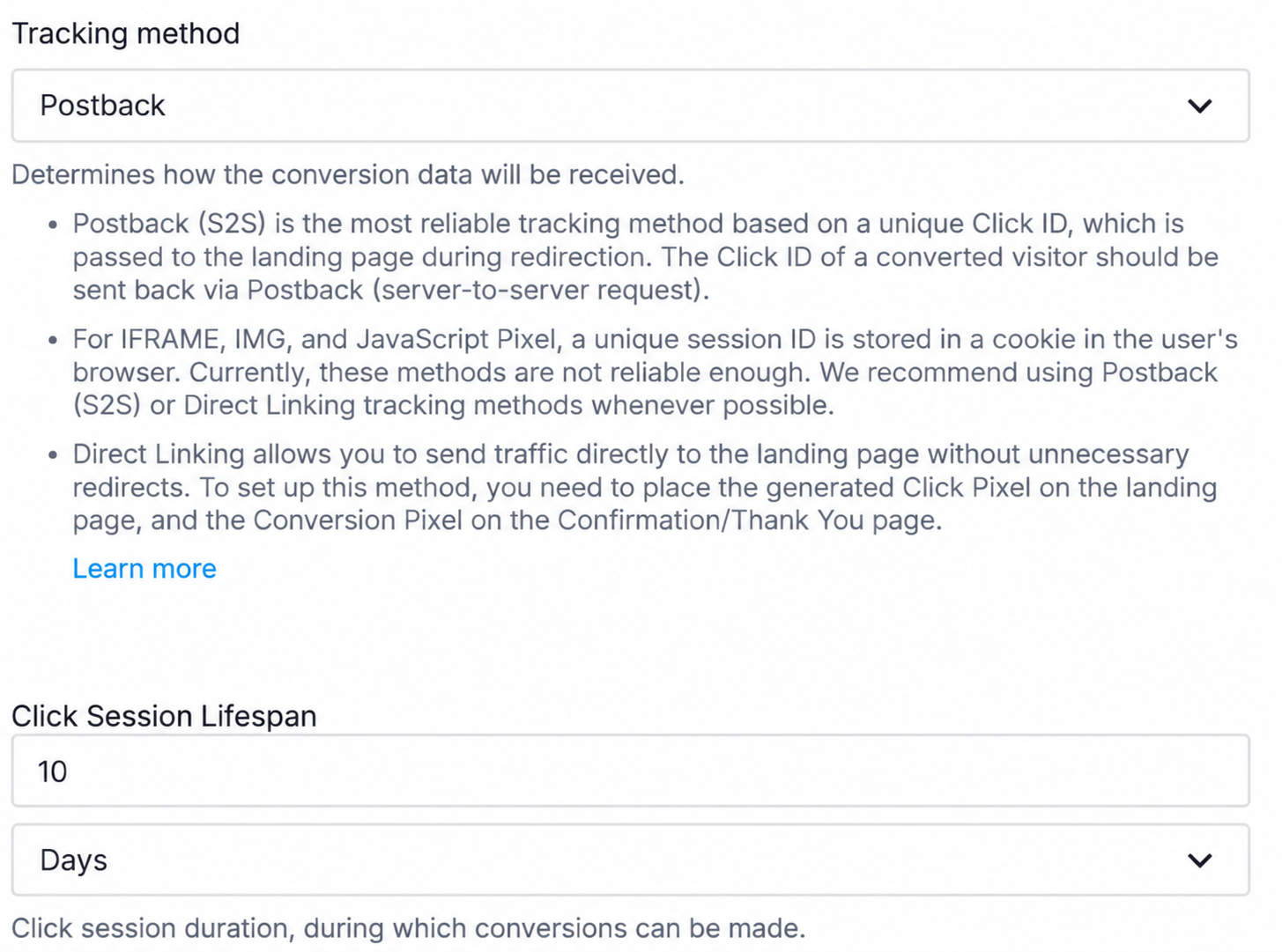
- Postback and API complexity — A standard S2S postback setup costs less to implement than custom commission logic, multiple payment integrations, or non-standard attribution windows.
- Support and SLA tier — Standard support versus a dedicated account manager with guaranteed response times is usually a separate line item, not a bundled default.
SaaS Subscription vs. Legacy Enterprise Contract Pricing
Most iGaming affiliate software falls into one of two pricing structures: a SaaS subscription billed monthly with published or semi-transparent tiers, or a legacy enterprise contract negotiated privately, with setup fees disclosed later in the sales process rather than upfront.
| SaaS Subscription | Legacy Enterprise Contract | |
|---|---|---|
| Pricing transparency | Often quoted early or published | Typically disclosed after initial demo calls |
| Contract length | Monthly or annual, shorter commitment | Annual or multi-year, harder to exit |
| Setup fee | Often included or minimal | Frequently separate and substantial |
| Scaling costs | Volume-tier increases, generally predictable | Renegotiated at contract renewal |
| Typical implementation time | 2-6 weeks | 6-12 weeks |
Neither model is inherently better. What matters is whether the structure matches how your program will actually grow. An operator planning rapid multi-brand expansion should understand how each model prices additional brands before signing — that’s a much harder conversation to have after.
Setup Fees: What They Cover (and Why They Vary)
Setup fees on iGaming affiliate software typically fund four things: postback and API configuration, custom commission-logic builds, historical data migration, and a dedicated onboarding manager — real implementation work, not a gatekeeping fee.
- Postback and API configuration — connecting your tracking to payment processors, CRM, and game providers.
- Custom commission-logic builds — CPA caps, hybrid RevShare structures, negative carryover rules configured to your specific program.
- Data migration — moving historical affiliate and player-attribution data from a legacy system without gaps.
- Dedicated onboarding — a named point of contact managing the implementation window, rather than a shared support queue.
A vendor advertising a zero setup fee hasn’t eliminated that work — they’ve priced it into the ongoing subscription instead. The right question isn’t whether the fee exists, it’s where the cost moved to.
Hidden Costs Operators Discover After Signing
The costs that most affect an iGaming affiliate program’s real budget aren’t in the headline price. They’re volume-tier overages, API call caps, white-label surcharges, and multi-brand licensing add-ons that activate only once usage crosses a threshold nobody flagged during the sales process.
- Volume-tier overages — cost per tracked click or conversion above the contracted tier.
- API call caps — throttling or overage billing once integration traffic exceeds a limit.
- White-label surcharges — an added fee to remove vendor branding from affiliate-facing dashboards.
- Multi-brand licensing — a per-brand fee that isn’t obvious from the base subscription price.
- Premium support escalation — SLA-backed response times billed separately from standard support.
Before You Sign — Ask These 5 Questions
- What happens to my monthly cost if tracked click volume triples?
- Is there a cap on API calls, and what’s the overage rate?
- Does adding a second brand require a new contract or a tier upgrade?
- What’s included in “support,” and what gets billed separately?
- What does it actually cost to exit — data export, minimum term, early termination fee?
What a Realistic Budget Looks Like by Operator Stage
Budget expectations differ meaningfully by operator stage. A new single-brand launch, a scaling multi-brand operator, and a high-volume enterprise operator sit in different pricing tiers — driven by volume and complexity, not by which features happen to be switched on.
| Operator Stage | Typical Cost Structure | What Drives the Range |
|---|---|---|
| New / single-brand launch | Standard subscription tier, lower setup ($500-$1,500/month + $1,000-$5,000 setup) | Click volume still ramping, standard postback setup |
| Scaling / multi-brand | Subscription + volume tier, moderate-to-high setup ($2,000-$4,000/month + $5,000-$15,000 setup) | Cross-brand deduplication, additional integrations |
| Enterprise / high-volume | Negotiated or custom contract, SLA-backed ($5,000-$15,000+/month + custom setup) | Custom commission logic, dedicated support, compliance requirements |
Frequently Asked Questions
Does iGaming affiliate software pricing scale with FTDs or with tracked clicks?
Most platforms price against tracked click and conversion volume rather than FTDs directly, though FTD volume is usually the underlying driver of that click volume.
Are free trials available for iGaming affiliate software?
Trial availability varies by vendor and is usually scoped to lower-volume evaluation accounts rather than full production use. Confirm the trial’s volume and feature scope before relying on it for a real evaluation.
What’s a normal implementation timeline?
Implementation timelines depend primarily on postback complexity and data migration scope rather than the software itself. 2-6 weeks is typical for a standard single-brand setup, while enterprise deployments with custom integrations can take 6-12 weeks or longer.
Do multi-brand operators pay more?
Yes. Most pricing models charge a premium for multi-brand or multi-property configurations, primarily to cover cross-brand deduplication and unified reporting infrastructure.
Should operators negotiate setup fees?
Setup fees tied to genuine implementation work — postback configuration, custom commission logic — are usually less negotiable than fees bundled in as pure margin. Ask what specific work a setup fee funds before trying to negotiate it down.
Pricing is only one input into a wider iGaming affiliate software comparison, but it’s the one most operators evaluate last and regret not asking about first. If you’re comparing platforms and want a straight answer on what implementation would look like for your specific volume and brand count, book a walkthrough with the Scaleo team.