Quick answer — a 30-day casino affiliate onboarding plan
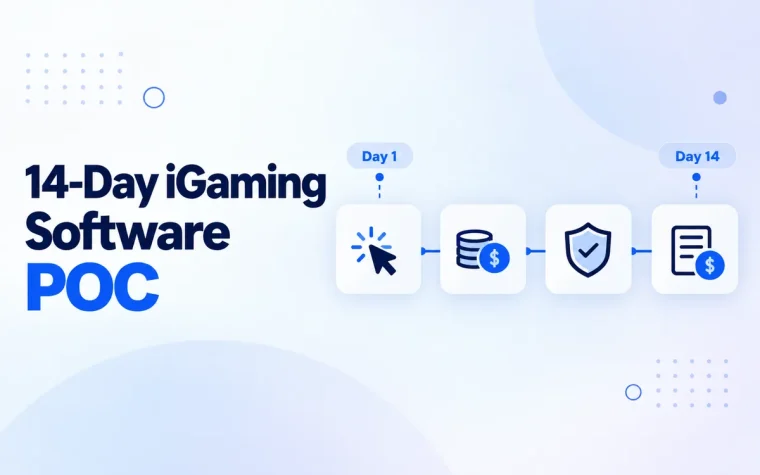
Affiliate onboarding is complete when an operator can trace an approved placement through click, registration, qualified first-time deposit (FTD), commission decision and the first affiliate statement. Give a new partner agreed terms, approved creative and a tested tracking link before asking for traffic. Use day 30 to decide whether to expand, repair or pause the relationship; it is not a deadline by which every legitimate partner must produce an FTD.
The first month of a casino affiliate partnership is an operational test, not just a welcome email and a dashboard login. Commercial terms, promotional rules, tracking, player qualification and payout records have to describe the same deal. If they do not, the first conversion can become the first dispute.
This guide is for an operator onboarding a newly approved affiliate into an existing casino program. It separates a synthetic end-to-end test from a live player conversion. A test event can prove that the data path works; it cannot prove that the partner will bring valuable players. The 30-day schedule is a review framework, not a performance benchmark or a promise of a first deposit.
What should a casino operator agree before an affiliate goes live?
Approval should define exactly what the affiliate may promote, where, and on what commercial terms. The operator and affiliate need one version of the agreement that the account manager, compliance reviewer, tracking team and finance team can all apply.
- Partner and placements: legal entity, payment details, owned domains or channels, intended traffic sources, target countries and the casino brands being promoted.
- Promotion rules: approved claims and creatives, offer conditions, disclosure requirements, restricted geographies, prohibited traffic, brand-bidding rules and the process for approving changes.
- Conversion rules: attribution window, eligible player definition, qualifying FTD conditions, duplicate-account treatment, CPA or RevShare calculation, holds, reversals and negative carryover where relevant.
- Money and evidence: statement period, payout threshold and method, invoice requirements, dispute route, and the records the affiliate can see when a conversion is rejected or adjusted.
For Great Britain-facing campaigns, affiliate content falls within the gambling advertising rules that apply to operators. The CAP gambling advertising rules explicitly include marketing by third parties acting on an advertiser’s behalf. Other markets have different requirements; have your compliance team approve the markets and creative before launch. Do not treat an affiliate’s assurance that a placement is compliant as the operator’s final check.
Write down what counts as a qualifying FTD before testing the link. A first deposit and a qualified casino FTD may not be the same event under your program rules. If the term is still ambiguous at onboarding, both the partner’s expectations and the commission test are ambiguous.
What should happen in the first 30 days?
Assign an owner and a pass condition to each stage. The sequence below works for a new affiliate; an established partner moving from another program may need extra data and creative checks.
| Window | Operator task | Evidence before moving on |
|---|---|---|
| Days 0–3 | Approve partner, placements, markets and terms; name a commercial and compliance owner. | Approved properties, signed terms and a dated creative brief. |
| Days 4–7 | Issue links and creative; run a synthetic click-to-commission test. | Link destination, event IDs, attribution result and commission test record. |
| Days 8–14 | Start controlled traffic from approved placements and inspect the first funnel data. | Live placement URLs, clicks, registration status and any rejected-event reasons. |
| Days 15–21 | Check creative, traffic-source quality, player eligibility and partner questions. | A short issue log with fixes, owners and retest results. |
| Days 22–30 | Reconcile any qualified FTD and commission; decide expand, repair or pause. | Day-30 review, affiliate-facing statement or clear reason no payable event exists. |
Do not replace a failed tracking test with live traffic. More clicks do not repair a missing click ID, an incorrect brand destination or an FTD rule that was never agreed.
How do you verify the path from click to qualified FTD?
Run one controlled journey using a sandbox or synthetic records before a partner scales traffic. The point is to connect each stage to the next, not merely to see a conversion total on a dashboard. A real-money test or real player data requires the operator’s own compliance and security approval.
| Step | Record to inspect | Pass condition |
|---|---|---|
| Affiliate link | Partner ID, campaign, target brand, destination and approved placement. | The link opens the intended brand and market without losing tracking parameters. |
| Click | Unique click or attribution ID and timestamp. | The operator can identify the partner and campaign that received the click. |
| Registration | Test player reference and registration event ID. | The registration links to the intended click under the written attribution rule. |
| Deposit and qualification | Deposit event, currency, status and FTD qualification decision. | An eligible event becomes one qualified FTD; an ineligible event has a visible reason. |
| Commission | Deal version, payable status, calculation and any hold or reversal. | The result matches the agreed terms and appears consistently in operator and affiliate views. |
For example, a synthetic click C-101 leads to registration P-101 and one eligible deposit event D-101. The operator should be able to show why P-101 was attributed to that partner and why D-101 did, or did not, create a payable FTD. If D-101 is delivered twice, the second delivery must not create a second payable conversion. If D-101 is reversed, the original event and the adjustment should remain explainable. These are test expectations, not a claim about any vendor’s default configuration.
If the chain breaks, the iGaming postback troubleshooting guide covers event-delivery failure modes; the zero-click dashboard diagnostic helps when the problem appears before registration. Retest the same journey after a fix and retain both the failed and passing records.
The first scale-up gate
Do not increase an affiliate’s traffic allowance because clicks or registrations look promising if the operator cannot explain one sample conversion all the way to its commission status. Fix the data path first; evaluate volume and player quality second.
What should the affiliate receive before sending traffic?
A partner should not have to guess which asset is current or why a conversion is pending. Give the affiliate a small, versioned launch pack:
- Approved tracking links for the specific brands and markets, with the destination checked on mobile and desktop.
- Current creatives, offer wording, significant conditions and the process for submitting new copy or placements.
- The agreed definition of a qualified FTD, attribution window, commission plan, hold and reversal rules.
- Dashboard access and a short explanation of what a click, registration, pending FTD, rejected event and payable commission mean in the reports.
- Statement and payout timetable, required invoice or tax paperwork, and one named contact for tracking or payment questions.
Record the version and delivery date of the pack. If an offer or commission term changes on day 18, both teams need to know which version applied to events before and after the change.
How should the operator review the first live traffic?
Start with the approved placements rather than opening every channel at once. The first review should ask whether the observed path matches the approved source, not whether the partner has hit an arbitrary FTD target. Compare click, registration and qualified-FTD counts over the same period, then investigate the gaps.
| Early signal | Check before drawing a conclusion | Next action |
|---|---|---|
| Placement is live; no clicks recorded | Link destination, redirects, campaign ID, publication date and whether the placement actually receives visits. | Repair the link or placement; do not judge player quality. |
| Clicks appear; no registrations | Landing-page market, device behavior, registration flow and source match. | Check experience and traffic fit before buying more exposure. |
| Registrations appear; no qualified FTD | Deposit-event delivery, eligibility rule, review status and sample size. | Resolve missing or rejected events; do not call the partner fraudulent from this signal alone. |
| FTD appears; commission differs | Deal version, CPA or RevShare basis, hold, currency and duplicate/reversal history. | Pause expansion until marketing and finance reproduce the amount. |
A small first-month sample is noisy. One valuable player can distort revenue-per-FTD; one late deposit can change an apparent zero-FTD result. Keep the day-30 decision grounded in source quality and event integrity, then revisit retention and net gaming revenue when cohorts are old enough to compare.
What is the day-30 decision if the partner has, or has not, produced an FTD?
Write a brief joint review and choose one of three outcomes. The operator should state what evidence supports the decision, what remains untested and who owns the next action.
- Expand: placements and creative are approved, tracking reconciles, any qualified FTD and commission are explainable, and the first traffic looks consistent with the declared source. Increase volume in controlled steps; continue quality checks.
- Repair and retest: the traffic source may be suitable, but a link, event, creative or reporting issue prevents a fair judgment. Assign the fix and rerun the same test before expanding.
- Pause: placements differ from those approved, promotional rules are breached, payment or identity checks remain unresolved, or material event discrepancies cannot be explained. Record the reason and follow the agreement’s review process.
No FTD by day 30 is not, by itself, a failed partner. First distinguish no traffic, traffic with a broken conversion path, and a working path with too little eligible volume. Ask for placement evidence and inspect the click-to-registration chain before judging commercial performance. Conversely, one FTD does not prove that traffic is compliant, incremental or profitable.
As the partner base grows, the same gates can be standardized without treating every affiliate identically. The scalable casino affiliate ecosystem guide covers the wider program architecture; this 30-day plan is the partner-level operating record within it.
What should remain in the onboarding record?
Keep one compact record that a new account manager could understand without searching old messages: partner and approved properties; market and brand permissions; signed terms and version; creative approvals; issued link and test IDs; test results; live placement URLs; first funnel review; any FTD qualification or rejection reason; commission calculation; payout expectation; open issues; and the day-30 decision. The point is continuity and auditability, not paperwork for its own sake.
The onboarding standard
A partner is ready to scale when the operator can show what was approved, where the traffic came from, how a player was attributed, why an FTD qualified, and how the resulting commission was calculated. If one answer is missing, the next step is a fix or a controlled retest, not more traffic.
Frequently asked questions
Should an affiliate have dashboard access before the first live click?
Yes, when the account and permissions are ready. Ask the affiliate to confirm the issued link, brand and campaign are visible and to understand the difference between pending, rejected and payable events. Dashboard access does not replace the operator’s own end-to-end test.
Is a synthetic FTD enough to approve live traffic?
A synthetic FTD can validate event delivery, attribution and commission logic. It does not validate live payment processing, player eligibility, traffic quality or a partner’s compliance. Approve live traffic only after the placement and creative checks are complete, then monitor actual events separately.
When should the first affiliate payout be discussed?
Before the affiliate sends traffic. State the settlement period, threshold, invoice requirements, hold rules and expected statement date in the agreed terms. At day 30, show the affiliate whether any conversion is pending, rejected or payable, even when no payout is due yet.
Who should own casino affiliate onboarding?
One account manager should own the handoff, while compliance approves placements and creative, tracking or product verifies the event chain, and finance signs off the commission and payout evidence. Record named owners for exceptions so a partner is not bounced between teams when a test fails.
Editorial scope: This is an operator workflow, not legal advice or a claim that any affiliate platform automatically performs every check. Promotional rules, FTD definitions and payout obligations depend on the operator’s market and signed agreement. The Great Britain advertising reference above was checked in September 2026; confirm current local requirements before a campaign goes live.