Casino and sportsbook operators do not need another list of AI writing apps for affiliates. They need tools that help their own teams recruit suitable partners, check promotional material, detect broken tracking, investigate unusual traffic and reconcile commissions. The best AI tool is the one that improves a specific operator decision while leaving a clear trail from source data to human approval.
Quick answer: For an iGaming affiliate operator, prioritize six AI use cases: partner research, promotional compliance review, tracking anomaly detection, traffic quality triage, player-cohort analysis and payout reconciliation. Test each tool with your own anonymized events and deal rules. Ask it to show the evidence behind every alert or recommendation, identify uncertainty, and send consequential decisions to a named reviewer. A polished AI dashboard is not a substitute for accurate attribution, agreed commission terms or an auditable payout calculation.
This guide is for the operator running an affiliate program, not an end affiliate looking for content or SEO tools. It builds on our earlier guide to the data foundations of AI-driven affiliate traffic optimization. Here, the question is more practical: which tools deserve a place in the operator workflow, and what should you make them prove in a demo?
What counts as the “best” AI tool for an operator?
There is no universal winner. A useful tool must match the job, the data available to your team and the decision you are willing to delegate. Before looking at features, define four things: the decision owner, the input data, the action the tool may recommend and the evidence you will retain for an audit or partner dispute.
For example, a traffic-quality alert is useful if an affiliate manager can trace it to the affected partner, sub-source, time window and conversion events. A score with no explanation is harder to review and easier to misuse. Likewise, an AI-generated payout suggestion has little value if finance cannot reproduce the amount from the approved deal and underlying events.
Six AI tool categories worth testing
1. Partner research and qualification
Operator job: shortlist prospective affiliates and decide who needs closer review. An AI research assistant can summarize a prospective partner’s public properties, stated GEOs, traffic methods and visible promotional patterns. It should save the source links and date of observation, separate facts from guesses, and flag missing information for the manager to request directly.
Demo test: give it three prospects: one with a clear licensed-market fit, one with an unclear traffic source and one with outdated public information. See whether it identifies the gaps instead of confidently scoring all three. Your team still checks identity, traffic ownership, brand fit and contract terms.
2. Promotional and compliance review
Operator job: review affiliate landing pages, ads and claims against the rules that apply to each brand and market. AI can help locate missing disclosures, stale offers, prohibited wording or mismatches between an approved creative and the page now live. The tool needs the current policy, the specific jurisdiction and a captured version of the material it assessed.
Demo test: include one compliant page, one expired offer and one page whose meaning depends on context. Require a quoted passage, page URL, capture date and policy reference for every flag. A compliance owner decides what to change or escalate; the model should not silently approve or block a partner.
3. Tracking and event-health monitoring
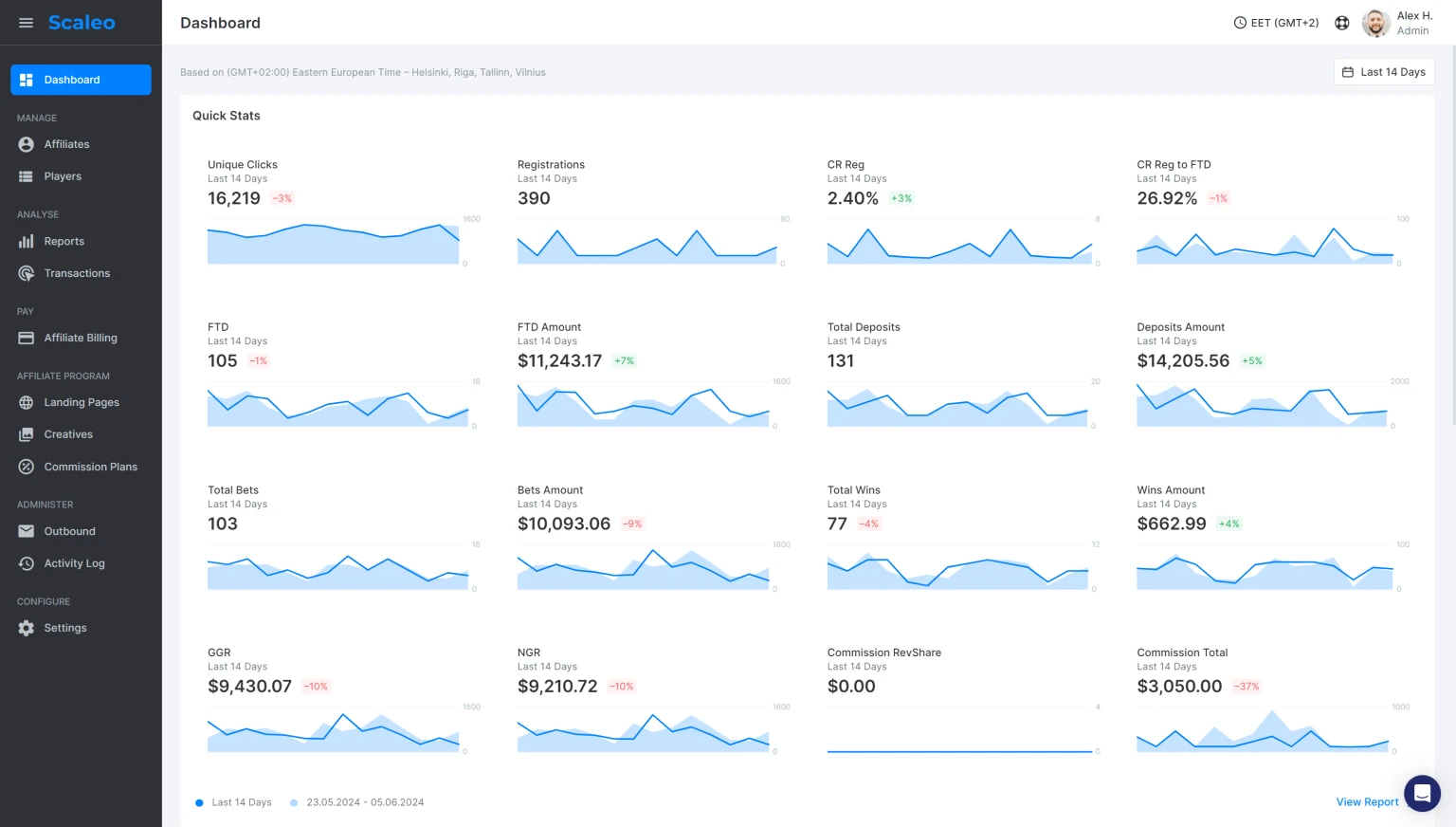
Operator job: catch missing or duplicated registration, FTD, deposit and revenue events before a reporting or payout cycle is affected. AI-assisted monitoring can spot deviations in event volume or timing, but it first needs dependable event IDs, timestamps, source IDs and known definitions.
Demo test: introduce a delayed postback, a duplicate FTD and a partner whose traffic genuinely increased. Ask the tool to distinguish a pipeline problem from a business change and to link each alert to example events. For the underlying integration checks, see our iGaming postback troubleshooting guide.
4. Traffic-quality and risk triage
Operator job: decide which unusual partner or sub-source patterns warrant investigation. A model may help rank anomalies in conversion timing, device concentration, GEO mix or downstream player behavior. It should show the comparison period, sample size and contributing signals. A small new partner with little history needs a different interpretation from an established high-volume source.
Demo test: provide a known quality issue and a legitimate event-driven traffic spike. Check whether the tool makes the distinction visible and allows a reviewer to mark false positives. Keep partner accusations, commission holds and account restrictions under human control.
5. Player-cohort analysis
Operator job: understand what happens after the first deposit. AI-assisted analysis can help compare cohorts by partner, sub-source, brand, GEO and acquisition period, then surface changes worth examining. It must use your defined revenue and qualification rules and make cohort maturity clear. An early forecast is an estimate, not booked revenue.
Demo test: ask for a comparison of two partners with different deal types and cohort ages. The output should show which events are observed, which values are projected and which deductions enter the operator’s NGR definition. For the reporting foundations, see our operator guide to iGaming affiliate reporting.
6. Commission and payout reconciliation
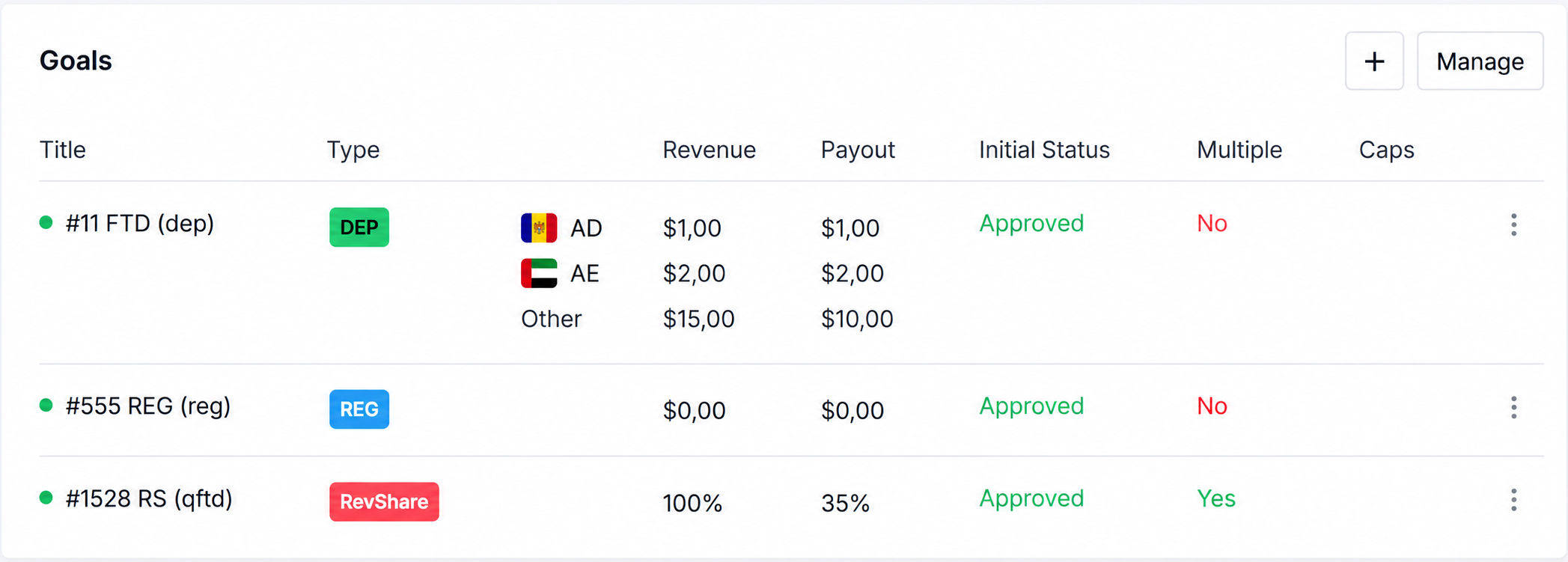
Operator job: identify discrepancies before approving a payout run. AI can point finance to a goal, market, conversion status or deal change that may explain an unexpected amount. The calculation itself must remain reproducible from the contract, event history and configured rules. A suggested adjustment is not a new commercial agreement.
Demo test: include a CPA conversion awaiting approval, a RevShare event with a revenue correction and a mid-period deal change. Require the tool to identify the applicable rule and show the affected records before any reviewer accepts an adjustment.
A demo scorecard you can actually use
Bring one anonymized partner and event sample to every demo. Use the same three scenarios for each product so that a better-looking presentation does not obscure a weaker result:
- Traceability: Can the reviewer get from an alert to the partner, sub-source, event IDs, timestamps and source records?
- Rules: Does the tool apply the correct brand, GEO, qualification and commission definitions for the date in question?
- Uncertainty: Does it say when the sample is small, a cohort is immature or data is missing?
- Action control: Can a named person approve, reject or annotate the recommendation before it affects a partner or payout?
- Recovery: Can the team correct a bad input and see the recommendation and audit trail update?
Record pass, partial or fail for each item. Ask the vendor to run the tests in the product, not only explain how the product is supposed to work. If a feature needs a custom integration, include that dependency in the evaluation rather than treating it as already available.
Start with one workflow, then expand
A useful pilot starts with a narrow question such as “Which payout exceptions should finance review first?” or “Which partner pages need a compliance check this week?” Define the baseline manual process, reviewer and acceptable false-alert rate before switching on AI assistance. Run the tool in a review-only mode long enough to compare its output with actual decisions. Document where it helped, where it missed context and which data fields were unreliable.
Only then consider automation. The first automated action might be routing an alert to the right queue. Holding a commission, changing a deal, rejecting a partner or declaring a compliance breach deserves a separate approval path.
Frequently asked questions
Can one AI tool handle the whole affiliate operation?
It may cover several tasks, but each needs different data and approval rules. Evaluate partner research, compliance, tracking, quality and finance separately. Do not assume a strong result in one workflow proves accuracy in another.
Should operators start with an AI tool or with affiliate reporting?
Start by checking whether your attribution, event definitions, deal terms and revenue calculations are reliable enough to review. AI can help find patterns in that data; it cannot establish which records or rules are correct when those foundations are missing.
Does an AI score justify withholding an affiliate payout?
No score should be the sole basis for a consequential payout decision. Review the underlying events, contract terms and applicable process, and retain a record of the human decision and the reason.
The operator takeaway
The best AI tools for iGaming affiliate operators make a specific decision faster to investigate and easier to audit. Begin with the workflow your team struggles to review consistently, test it on your own data, and demand a visible path from input to recommendation to human action. If you are assessing the affiliate platform underneath that workflow, explore Scaleo and use the scorecard above to frame the questions you bring to a product demo.